
For many people, the idea of spine surgery can feel overwhelming. Questions about safety, recovery, and the success of the procedure are often the first things that come to mind. Fortunately, advancements in medical technology are helping address many of these concerns.
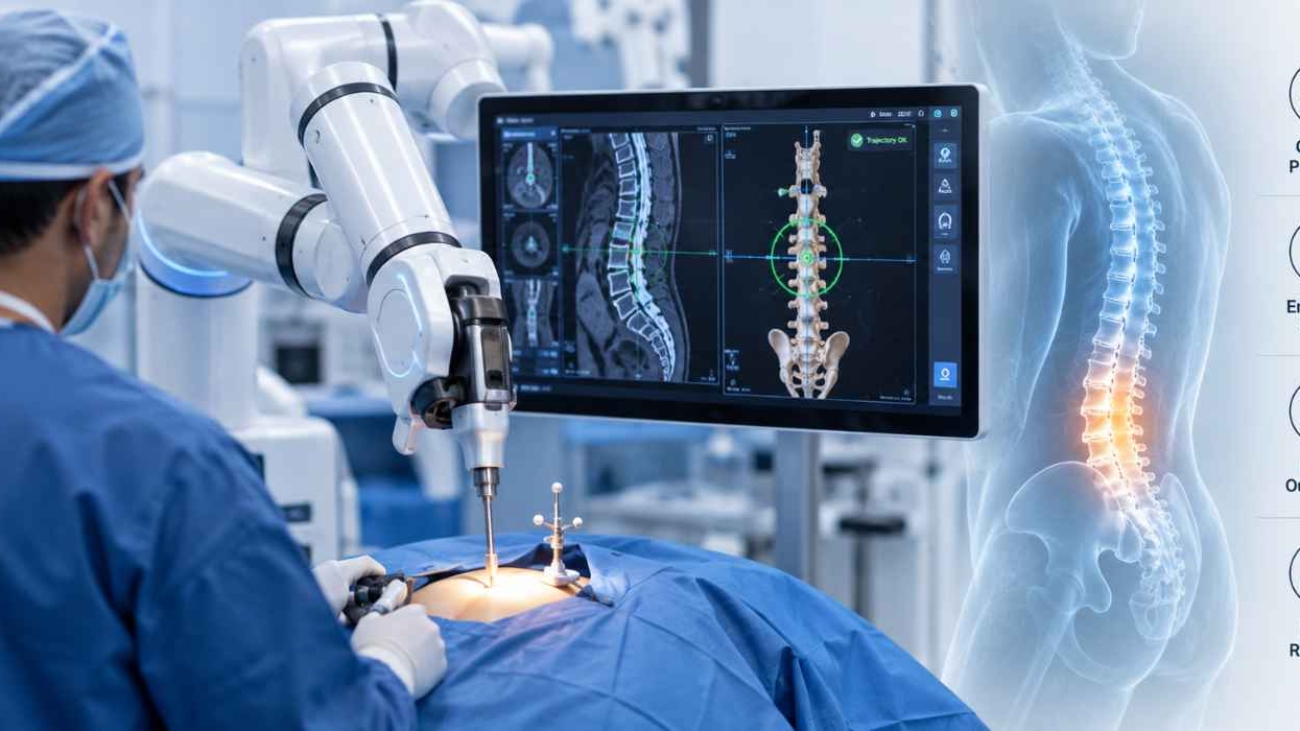
One of the biggest developments in modern spine care is robotic-assisted spine surgery. The new robotic technology acts as an advanced guidance for the surgeons that helps improve surgical accuracy. The result is a more personalized approach to spine surgery, with greater precision at every step of the procedure.
Why Precision Matters in Spine Surgery
The spine is one of the most complex structures in the human body. It protects the spinal cord, supports body movement, and contains delicate nerves that control sensation and muscle function.
Even a small variation in the placement of surgical instruments or implants can influence the outcome of the procedure. That is why precision plays such an important role in spine surgery.
Modern robotic systems are designed to help surgeons plan the operation in detail before entering the operating room and execute that plan with exceptional accuracy.
How Robotic Technology Assists the Surgeon
Every patient’s spine is different. Factors such as bone structure, spinal alignment, and the location of the problem vary from person to person.
Before surgery, advanced imaging is used to create a detailed three-dimensional model of the patient’s spine. This allows the surgeon to carefully plan the procedure based on the individual’s anatomy.
During surgery, the robotic system provides real-time guidance, helping the surgeon place screws and implants with a high degree of precision while following the planned surgical pathway.
It is important to understand that the robot never performs the surgery on its own rather it guides the surgeon to carryout the procedure with precision and accuracy.
How Patients May Benefit
The enhanced accuracy offered by robotic-assisted technology can provide several potential benefits, including:
- More precise implant placement
- Better preservation of healthy surrounding tissues
- Reduced disruption to muscles
- Improved spinal alignment
- Greater confidence in surgical planning
For many patients, these advantages may contribute to a smoother recovery and improved long-term outcomes.
Is Robotic Spine Surgery Suitable for Everyone?
Not every spinal condition requires robotic-assisted surgery. The most appropriate treatment depends on the nature of the spinal problem, its severity, the patient’s overall health, and the surgeon’s clinical evaluation.
Whether surgery is recommended or not, the goal always remains the same: to relieve pain, restore function, and improve quality of life using the most appropriate treatment approach.
Robotic-assisted spine surgery represents a significant advancement in modern spine care, offering surgeons enhanced precision, improved planning, and greater confidence during complex procedures. As technology continues to evolve, patients can benefit from surgical approaches that are increasingly personalized and focused on achieving the best possible outcomes.
At Surannavar Hospital, we are proud to be the first hospital in Belagavi to introduce robotic-assisted surgery, bringing advanced orthopedic technology closer to patients in the region. By combining advanced robotic technology with the expertise of our spine specialists, we are committed to delivering safer, more precise, and patient-focused spine care that helps individuals return to a healthier, more active life.