
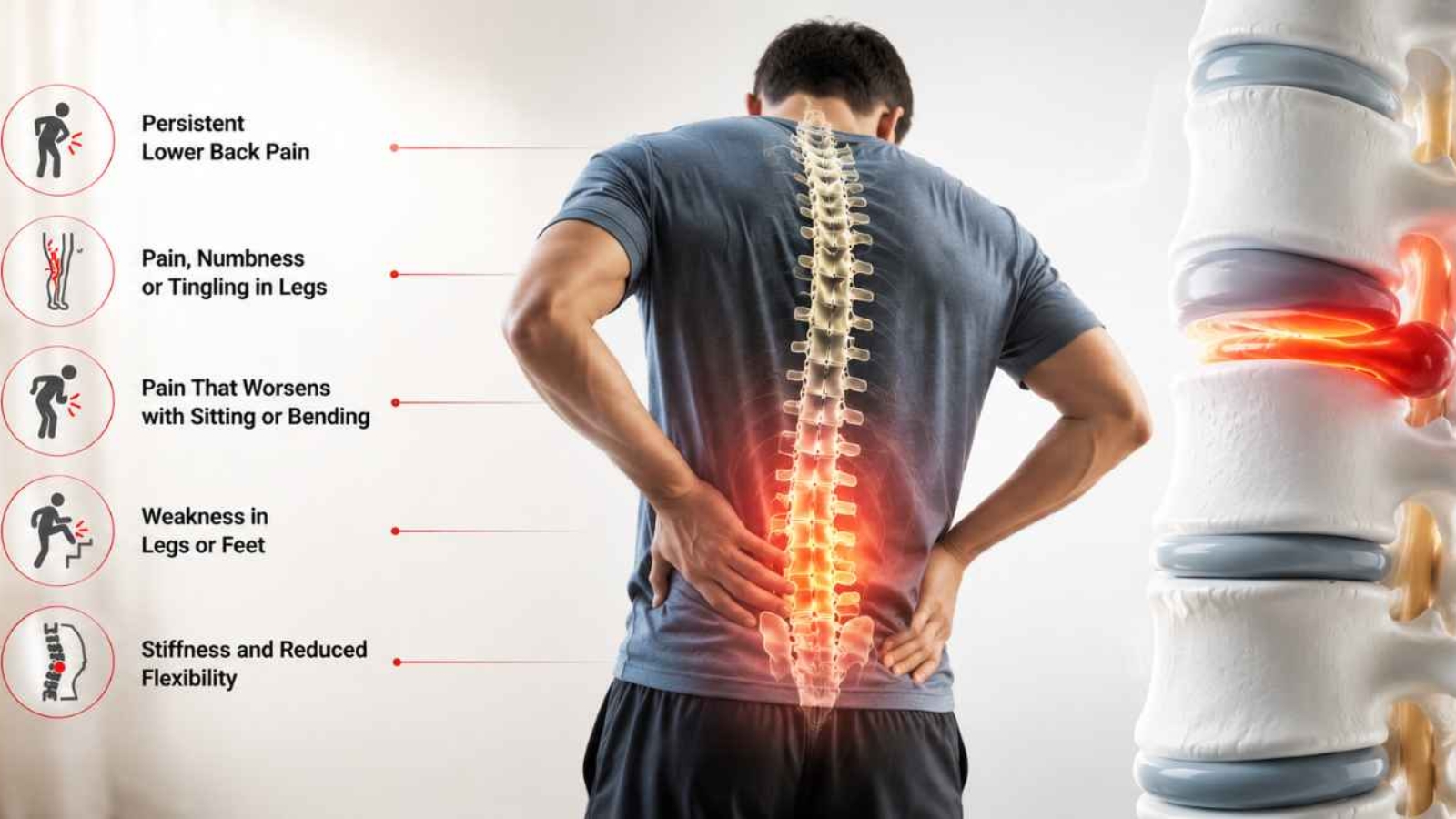
Most people experience back pain at some point in life.
Maybe it started after lifting something heavy. Maybe it appeared after a long day at work. Or perhaps you woke up one morning with a sharp pain in your lower back and assumed it would go away on its own.
While many episodes of back pain are temporary, some may be your body’s way of warning you that something more serious is happening inside your spine.
Persistent discomfort can sometimes result from a spinal disc problem linked to slip disc also know as herniated disc that places pressure on nearby nerves.
The challenge? Many people ignore the early signs until the pain begins affecting their ability to walk, sit, work, or even sleep comfortably.
So how do you know if your back pain is more than just a strain?
What Exactly Is a Slip Disc?
Your spine relies on flexible, shock-absorbing structures called intervertebral disc that help reduce pressure on the bones and allow smooth movement during daily activities.
A slip disc occurs when the soft inner portion of the disc pushes outward and irritates nearby nerves. When this happens, the problem isn’t always the disc itself. It’s the pressure placed on the nerves that often causes the pain.
Warning Sign #1: Your Back Pain Persists Longer Than Expected
Most muscle strains improve within a few days or weeks with rest and basic care.
If your back pain continues to linger, repeatedly returns, or seems to worsen over time, it may be worth investigating further.
Warning Sign #2: Pain Travels Down Your Leg
This is one of the most common clues.
If pain starts in your lower back and shoots through your buttock, thigh, or calf, it could indicate irritation of the sciatic nerve. Many patients describe it as a burning, electric, or stabbing sensation.
Warning Sign #3: Numbness or Tingling
Do your feet feel “asleep” even when they aren’t?
A slipping disc can affect nerve signals, causing tingling, numbness, or a pins-and-needles sensation in the legs or feet.
Warning Sign #4: Pain Gets Worse After Long Hours of Sitting
Many patients with a slip disc notice that prolonged sitting increases their discomfort.
Long car rides, desk work, or watching television for extended periods may trigger symptoms because sitting places additional pressure on the discs in the lower spine.
Warning Sign #5: Weakness in the Leg or Foot
This is a symptom that should never be ignored.
If you find yourself stumbling, dragging a foot, or feeling weakness in your leg, the affected nerve may be struggling to function properly.
When Should You See a Spine Specialist?
Seek medical attention if:
- Pain persists for several weeks
- Pain travels down the leg
- You experience numbness or weakness
- Everyday activities become difficult
- Symptoms keep returning
Early diagnosis often means more treatment options and a better chance of avoiding long-term complications.
Not every episode of back pain is a slip disc, but persistent pain should never be dismissed as “just getting older.” Your spine often gives warning signs before a problem becomes severe. Recognizing these symptoms early and seeking timely evaluation can help prevent unnecessary suffering and get you back to living comfortably and confidently.