
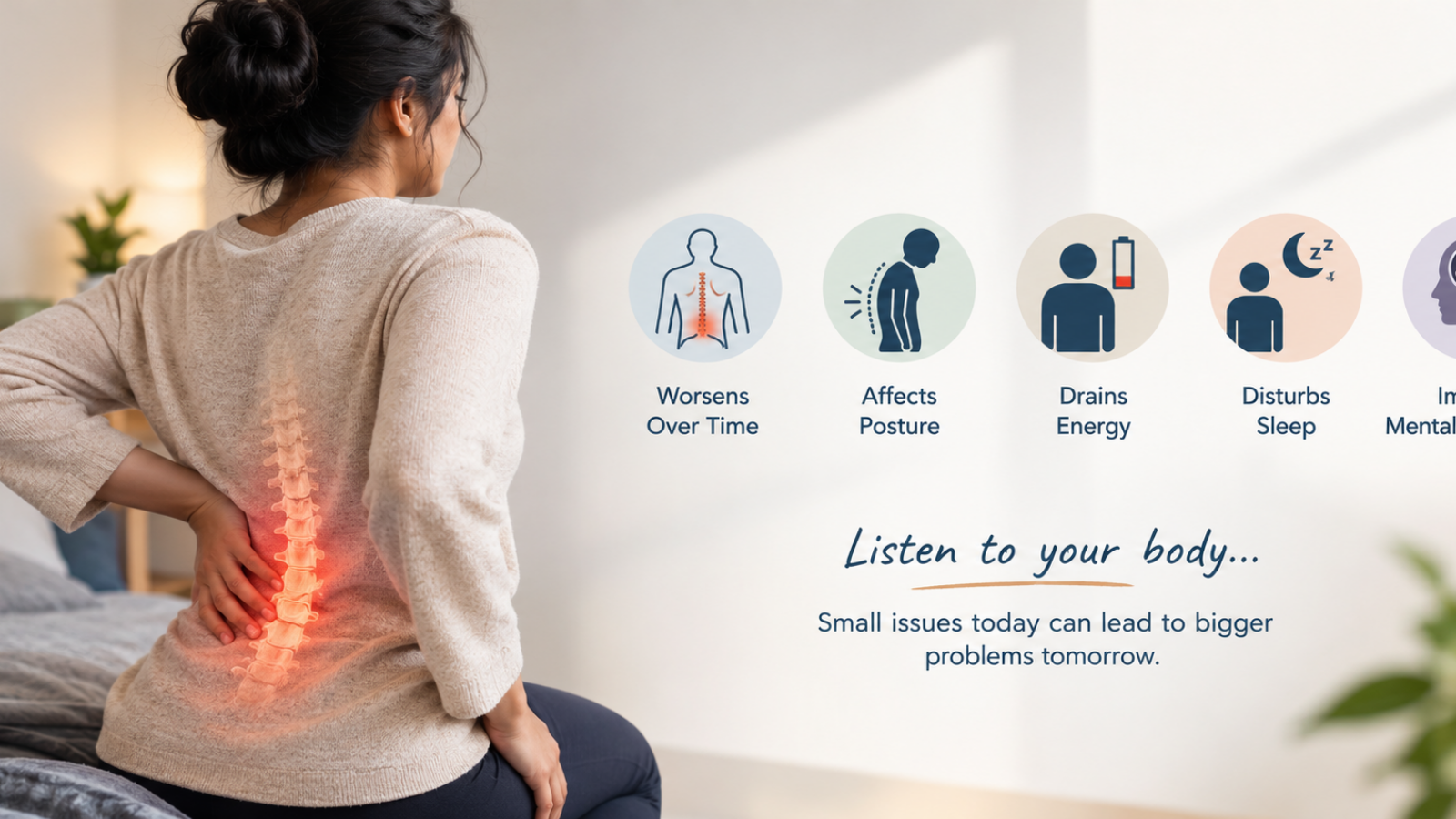
Back pain is easy to put on the back burner.
You may blame it on a long day at work, an uncomfortable chair, a tiring journey, or a little too much physical activity. If the pain settles after some rest, it is easy to move on without giving it much thought.
But when the same discomfort keeps returning, things can gradually change. You may stop taking the stairs, avoid lifting things, give up exercise, or think twice before going out for a long walk. What started as an occasional ache can slowly begin influencing the way you live.
That is why chronic back pain deserves more attention than simply finding ways to work around it.
When Back Pain Starts Changing the Way You Move
Your spine plays a role in almost everything you do. When movement becomes uncomfortable, your body naturally tries to protect itself.
You may begin sitting differently, avoiding certain movements, or putting more weight on one side of your body. Over time, these adjustments can affect muscle strength, flexibility, and movement patterns.
The concern is not that every episode of back pain will lead to a serious problem. Rather, persistent pain can gradually limit your activity and make everyday movements feel more difficult than they should.
What Could Be Behind Persistent Back Pain?
There is no single explanation for chronic back pain.
It may be related to muscle or ligament strain, age-related changes in the spinal discs, arthritis affecting the joints, nerve irritation, or conditions such as a herniated disc or spinal narrowing.
The nature of the pain can sometimes provide useful clues.
A localised ache may feel very different from pain that travels into the buttock or leg. Similarly, numbness, tingling, or weakness may suggest that a nerve is being affected.
Finding the underlying cause matters because treatment depends on what is actually happening in the spine.
When Back Pain Deserves Closer Attention
Consider getting your symptoms evaluated if you notice:
- Pain that keeps returning: Repeated episodes should not simply become part of your routine.
- Pain spreading into an arm or leg: This can sometimes indicate nerve involvement.
- Numbness or tingling: These sensations may occur when a spinal nerve is irritated or compressed.
- Weakness: Difficulty lifting your foot, climbing stairs, or using an affected limb needs medical attention.
- Reduced mobility: If bending, walking, standing, or other everyday movements are becoming difficult, it is worth finding out why.
- Sleep disruption: Pain that repeatedly interferes with sleep can have a significant effect on your overall wellbeing.
The Bigger Impact of Living With Back Pain
The physical discomfort is only one part of the problem.
Persistent back pain can influence your confidence in moving. You might become cautious about exercising or avoid activities you once enjoyed because you are worried about triggering another episode.
Less movement can then become a habit, making it harder to maintain strength and flexibility. This can create a frustrating cycle where pain leads to less activity, and less activity makes normal movement more difficult.
Recognising this pattern early can help you avoid allowing back pain to dictate your routine.
When Should You See a Spine Specialist?
An occasional sore back after an unfamiliar activity does not necessarily mean you need specialist care. However, pain that persists, repeatedly returns, travels into the limbs, or interferes with your daily life deserves proper evaluation.
A spine specialist can assess your symptoms, examine your movement and nerve function, and determine whether further investigations are needed. Depending on the underlying cause, treatment may range from lifestyle changes and physiotherapy to medication, or surgery in selected cases.
Chronic back pain should not become something you simply learn to live with. The more important question is why it keeps happening and whether it is beginning to limit the things you enjoy doing.
You do not have to wait until the pain becomes severe before seeking answers. Paying attention to recurring symptoms and getting the right evaluation can help you understand the problem and choose an appropriate path towards better spine health and more comfortable movement.