
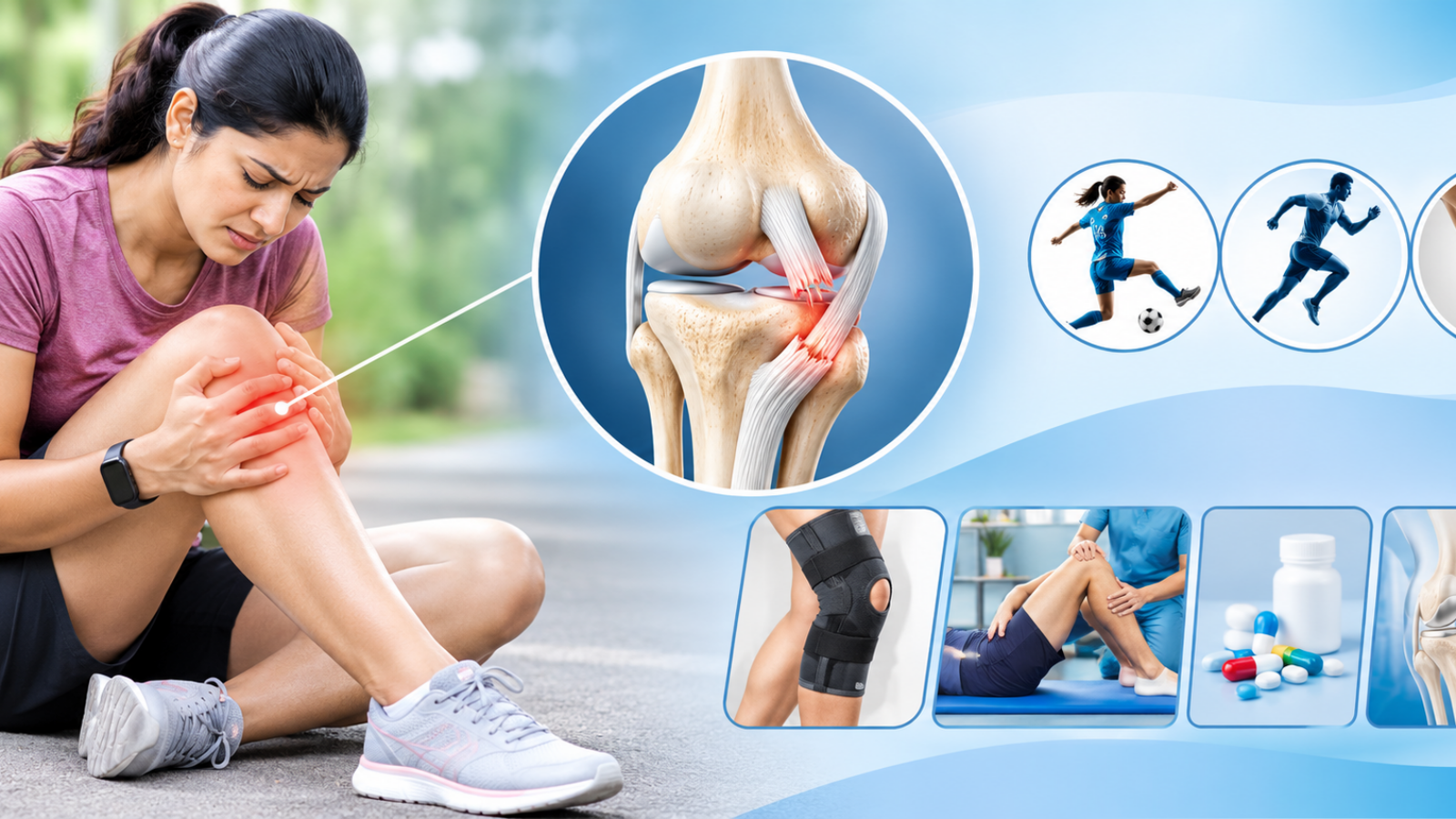
The knee plays an important role in supporting body weight and allowing smooth movement during walking, running and other physical activities. However, sudden twisting movements, sports-related accidents or unexpected falls can damage the ligaments that keep the knee joint stable. Knee ligament injuries may cause pain, swelling and difficulty moving the leg, affecting everyday activities and physical performance. Recognising the warning signs and understanding the available treatment options can help individuals receive appropriate care and protect long-term knee function.
What Are Knee Ligament Injuries?
Knee ligament injuries occur when one or more of the strong bands of connective tissue that support the knee joint become stretched or torn. These ligaments connect the thigh bone (femur) to the shin bone (tibia) and help maintain stability during movement.
The severity of an injury can range from mild stretching to a complete ligament tear. Depending on the affected ligament and extent of damage, patients may experience pain, swelling, joint instability or difficulty putting weight on the affected leg. Early assessment by an orthopaedic specialist helps determine the extent of the injury and the appropriate treatment approach.
What Are the Different Types of Knee Ligament Injuries?
The knee contains four major ligaments that provide support and control joint movement. Injuries can affect any of these structures.
- Anterior Cruciate Ligament (ACL) Injury: The ACL helps control forward movement and rotation of the knee. It is commonly injured during sudden direction changes, jumping or awkward landings.
- Posterior Cruciate Ligament (PCL) Injury: The PCL prevents the shin bone from moving too far backwards. Damage may occur following a direct impact to the front of the knee.
- Medial Collateral Ligament (MCL) Injury: The MCL provides stability to the inner side of the knee. It can be injured when an impact pushes the knee inward.
- Lateral Collateral Ligament (LCL) Injury: The LCL supports the outer side of the knee and may be damaged by force applied to the inner side of the joint.
What Are the Common Symptoms of Knee Ligament Injuries?
Symptoms may vary depending on which ligament is affected and how severely it is damaged. Some injuries cause immediate discomfort, while others may become noticeable over time.
Common warning signs include:
- Sudden Knee Pain: Sharp discomfort may occur during an injury, particularly when the ligament is stretched or torn.
- Swelling Around the Joint: Inflammation may develop shortly after the injury, sometimes within a few hours.
- Popping Sensation: Some individuals experience or hear a popping sound at the time of an ACL injury.
- Knee Instability: The knee may feel weak or give way while standing, walking or changing direction.
- Restricted Movement: Pain and swelling can make bending or straightening the knee difficult.
- Difficulty Bearing Weight: Severe injuries may make it uncomfortable or difficult to stand or walk normally.
What Causes Knee Ligament Injuries?
Knee ligament damage commonly occurs due to sudden forces or movements that place excessive stress on the joint.
Some common causes include:
- Sudden changes in direction while playing sports.
- Landing incorrectly after jumping.
- Direct impact or collision involving the knee.
- Twisting the knee while the foot remains firmly on the ground.
- Road accidents, falls or other traumatic injuries.
What Are the Treatment Options for Knee Ligament Injuries?
Knee ligament injury treatment depends on the affected ligament, severity of damage, activity level and overall health of the patient.
Common treatment approaches include:
- Rest and Activity Modification: Limiting activities that place pressure on the injured knee allows the tissues to recover.
- Ice Therapy and Compression: Applying ice and using suitable compression may help manage swelling and discomfort.
- Medications: Doctors may recommend appropriate medicines to relieve pain and inflammation.
- Physiotherapy: Guided exercises help restore knee movement, strengthen surrounding muscles and improve joint stability.
- Knee Bracing: A suitable knee brace may provide additional support and protect the joint during recovery.
- Surgical Treatment: Severe ligament tears, particularly certain ACL injuries, may require surgical reconstruction to restore knee stability. The decision depends on the patient’s condition and functional requirements.
Conclusion
Knee ligament injuries can affect joint stability, mobility and the ability to perform everyday activities. Identifying symptoms early and receiving an accurate diagnosis are important steps towards effective treatment. Depending on the extent of damage, a combination of rehabilitation, supportive care or surgical intervention may be recommended. Consulting an orthopaedic specialist can help patients understand their condition and choose an appropriate treatment plan to support recovery and long-term knee health.