
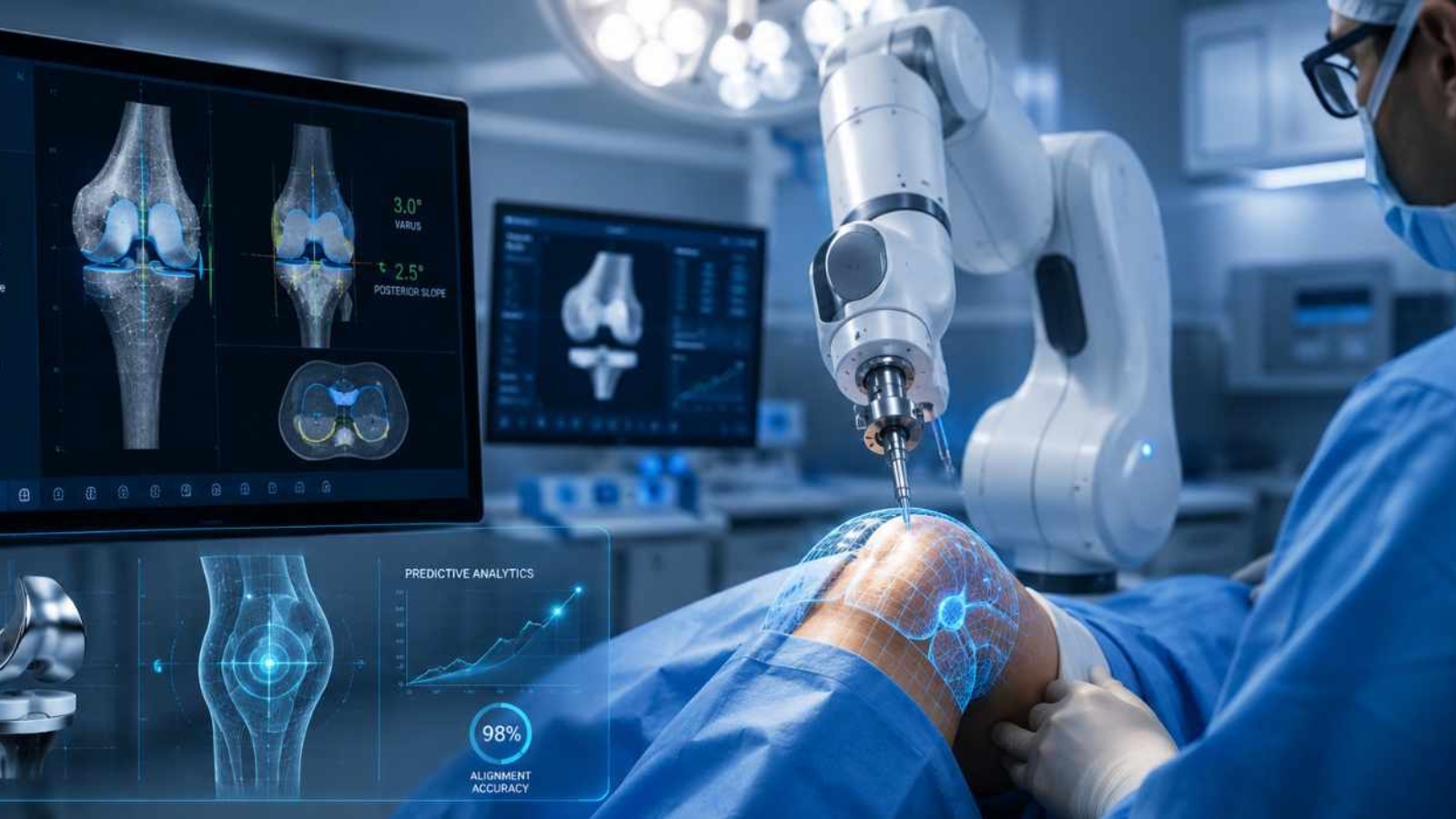
Joint replacement surgery has come a long way from traditional techniques that relied heavily on manual measurements and standard implant positioning. Today, advancements like Artificial Intelligence (AI) and 3D mapping technology are transforming the way orthopedic surgeries are planned and performed. These innovations are helping surgeons achieve greater precision, improve joint alignment, and create a more personalized surgical experience for patients.
As robotic-assisted surgery becomes more advanced, AI and 3D mapping are playing an increasingly important role in improving outcomes in knee and hip replacement procedures.
What Is 3D Mapping in Joint Replacement Surgery?
Every patient’s joint structure is unique. Factors such as bone shape, alignment, cartilage wear, and ligament balance vary from person to person. Traditional joint replacement methods often relied on standard measurements, but modern 3D mapping allows surgeons to study the patient’s anatomy in much greater detail before surgery even begins.
Using advanced imaging scans, the technology creates a virtual 3D model of the joint. This detailed model helps surgeons:
- Understand the exact condition of the joint
- Plan implant positioning accurately
- Assess alignment and movement patterns
- Customize the surgical approach for the patient
This level of planning improves surgical precision and helps create a more natural-feeling joint after surgery.
How AI Supports Surgical Precision?
Artificial Intelligence works alongside robotic-assisted systems by analyzing large amounts of data and helping optimize surgical planning.
AI can assist surgeons by:
- Predicting the best implant size and placement
- Improving alignment accuracy
- Providing real-time feedback during surgery
- Supporting consistent surgical execution
Rather than replacing the surgeon, AI acts as an advanced support system that enhances decision-making and precision.
Why Precision Matters in Joint Replacement?
Joint replacement success depends heavily on proper implant positioning and balance within the joint. Even small alignment variations can affect comfort, mobility, and long-term performance.
With AI and 3D mapping, surgeons can achieve:
- Better joint alignment
- Improved stability and movement
- Reduced stress on the implant
- More balanced ligament function
This often contributes to smoother recovery and improved long-term outcomes.
A More Personalized Approach to Surgery
One of the biggest advantages of AI-driven planning is personalization. Instead of using a “one-size-fits-all” approach, modern technology allows the surgery to be tailored to the patient’s individual anatomy.
This can help patients experience:
- A more natural range of motion
- Improved comfort during daily activities
- Greater confidence after surgery
Patients today are increasingly looking for treatments that are both advanced and personalized, and these technologies help meet those expectations.
The Future of Orthopedic Care
AI and 3D mapping are not just future concepts. They are already reshaping modern orthopedic surgery by making procedures more precise and patient-focused. As technology continues to evolve, joint replacement surgery is becoming more accurate, less invasive, and more predictable than ever before.
AI and 3D mapping are changing the way joint replacement surgeries are planned and performed, helping make procedures more precise and personalized for each patient. By improving planning, precision, and personalization, these technologies are helping surgeons deliver better joint function and improved patient experiences. For individuals considering knee or hip replacement, understanding how modern technology supports surgical accuracy can provide greater confidence in the treatment journey.