
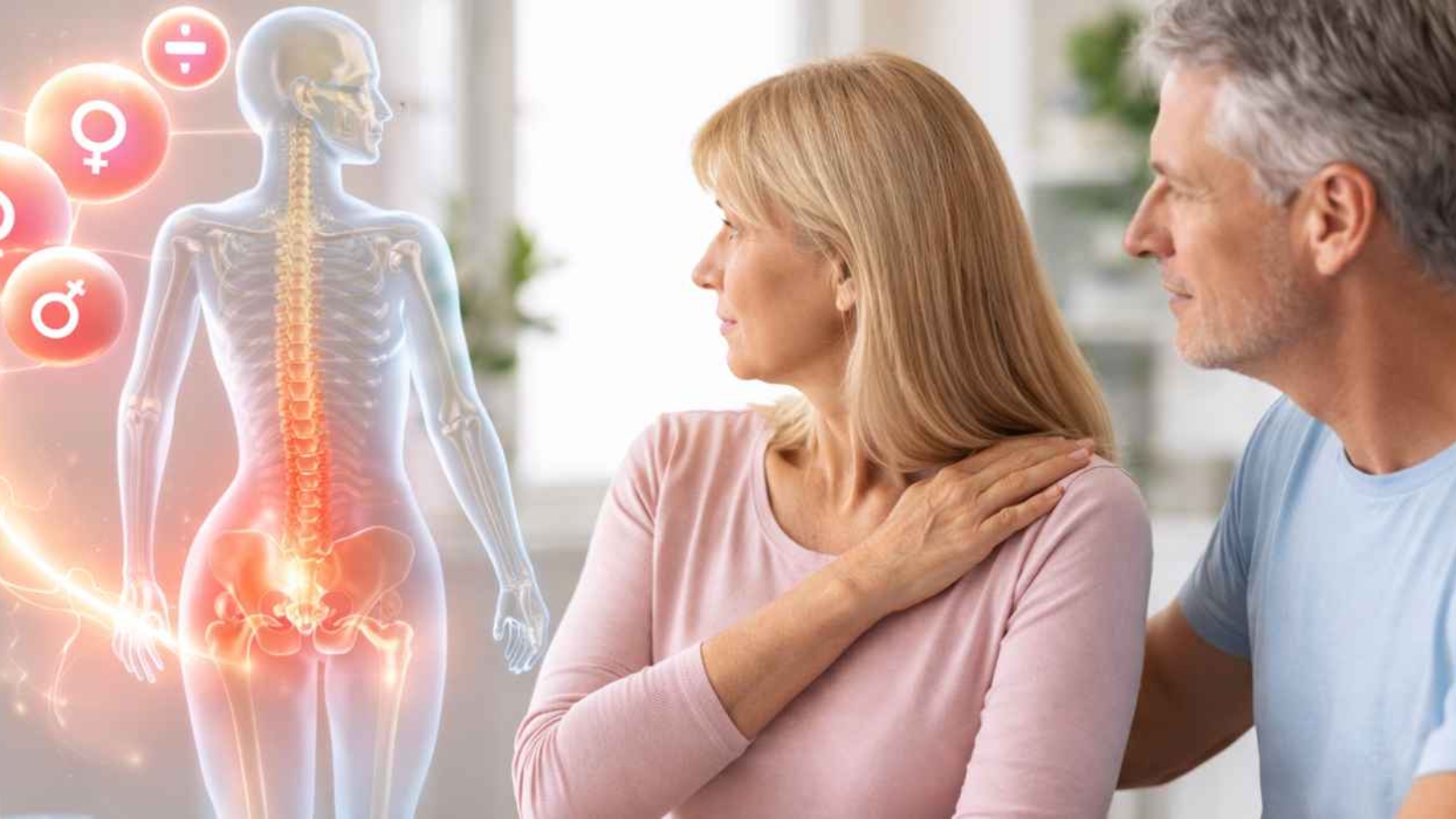
Midlife is often when people begin to notice subtle changes in their bodies like slower recovery, joint stiffness, or unexplained aches. One change that usually happens quietly, without obvious symptoms, is bone loss. For many adults, especially women, hormonal shifts during midlife play a major role in how quickly bone strength begins to decline.
Understanding this connection is crucial during these years as bone loss can shape your mobility and fracture risk later in life.
How Hormonal Changes Impact Your Bone Health?
Bones are not static structures, they are living tissue, constantly being broken down and rebuilt through a process called remodeling. Hormones help keep this process balanced.
But when the hormonal levels change, the balance gets shifted often towards more bone breakdown than bone formation.
Estrogen and Bone Health in Women
In women, estrogen is one of the most important hormones for maintaining bone density. It helps slow down bone resorption (the process where bone is broken down).
During perimenopause and menopause, estrogen levels fall sharply. As a result:
- Bone loss accelerates
- Bone density drops more quickly than at any other stage of life
- The risk of osteopenia and osteoporosis increases
In fact, many women lose a significant percentage of bone mass in the first few years after menopause without even realizing it.
How Hormonal Changes in Men Affect Bone Health?
While men do not experience a sudden hormonal drop like women, but testosterone levels gradually decline with age. Testosterone is essential for maintaining skeletal health in men, stimulating bone formation and helping absorb calcium. With gradual decline in the levels result in:
- Reduced bones density over time
- Higher risk of fractures later in life
- Muscle support around the joints become weak
And that is why osteoporosis is not just a women’s issue, it’s often underdiagnosed in men.
Which Are The Other Hormones That Influence Bone Health?
Midlife hormonal shifts don’t just stop with estrogen and testosterone. Changes in:
- Thyroid hormones
- Cortisol (stress hormone)
- Parathyroid hormone
can also affect how bones absorb calcium and rebuild themselves. Chronic stress, poor sleep, and untreated thyroid disorders can quietly worsen bone health.
What You Can Do To Reduce Midlife Bone Loss?
While you cannot stop the natural hormonal shifts of midlife, but you can reinforce your skeleton system. Simple but consistent steps make a difference:
- Stay physically active with weight-bearing and strength exercises
- Ensure adequate calcium and vitamin D intake
- Avoid smoking and limit alcohol
- Manage stress and prioritize sleep
- Consider bone density screening
Midlife represents an important opportunity to identify bone loss early and intervene before it becomes a concern.
Hormonal changes during midlife are natural, but their impact on bone health doesn’t have to be inevitable. By understanding how hormones influence bone strength and making timely lifestyle choices, you can protect your bones, preserve mobility, and stay active well into later life.
Bone health isn’t just about aging, it’s about how you care for your body during these transitional years.